Marketing has always been shaped by technology. From print advertising to digital campaigns and social media ecosystems, every evolution has changed how brands connect with people. Generative AI is the next major turning point. It is not simply a productivity tool. It is reshaping how marketers think, create, analyze, and engage.
What makes generative AI different is its ability to produce original content and insights in real time. It learns patterns from vast datasets and turns them into usable outputs, whether that is text, visuals, campaign ideas, or predictive analysis. This capability is pushing marketing toward a future that is faster, more personalized, and more adaptive than ever before.
As adoption grows, generative AI is becoming less of an experiment and more of a foundational layer in modern marketing strategy.
Understanding Generative AI in Marketing
Generative AI refers to systems that can create new content instead of just processing existing information. In marketing, this includes writing copy, generating images, creating video concepts, producing customer insights, and even simulating campaign outcomes.
Unlike traditional automation, which follows rigid rules, generative AI adapts. It responds to context, audience behavior, and performance feedback. This makes marketing less static and more dynamic. Campaigns can evolve instead of staying locked into a predefined structure.
How Generative AI Systems Learn
At the core of generative AI are advanced machine learning models trained on large datasets. These systems recognize patterns in language, visuals, and user behavior. Over time, they refine outputs based on feedback loops and performance metrics.
The technical foundations behind these systems are similar to the work done by an AI ML Development Company, where intelligent models are built to learn continuously rather than remain fixed. For marketing teams, this learning capability means tools improve with use, producing outputs that align more closely with audience expectations.
How Generative AI Is Transforming Marketing Strategy
Generative AI does more than speed up execution. It influences how strategies are built from the ground up. Marketing decisions are increasingly supported by predictive insights and real-time analysis rather than delayed reporting.
Instead of reacting to campaign results after launch, marketers can simulate outcomes before committing resources. AI models can estimate engagement, highlight risks, and recommend adjustments early. This reduces guesswork and supports smarter planning.
From Mass Messaging to Micro Personalization
Traditional marketing relied on broad segmentation. Generative AI enables messaging that adapts to individuals. Content can shift based on browsing history, purchase behavior, and interaction patterns. The result is communication that feels relevant instead of generic.
This level of personalization changes customer expectations. People now assume digital experiences will recognize their preferences. Brands that fail to adapt risk feeling outdated. Generative AI helps bridge that gap by scaling personalization without overwhelming human teams.
Professionals working in modern Digital Marketing Services increasingly integrate AI-driven personalization frameworks to maintain competitive engagement levels while managing complex campaign ecosystems.
Use Cases of Generative AI in Marketing
Generative AI is already embedded in practical marketing workflows. Its value comes from versatility. The same system can support creative production, customer interaction, and strategic optimization.
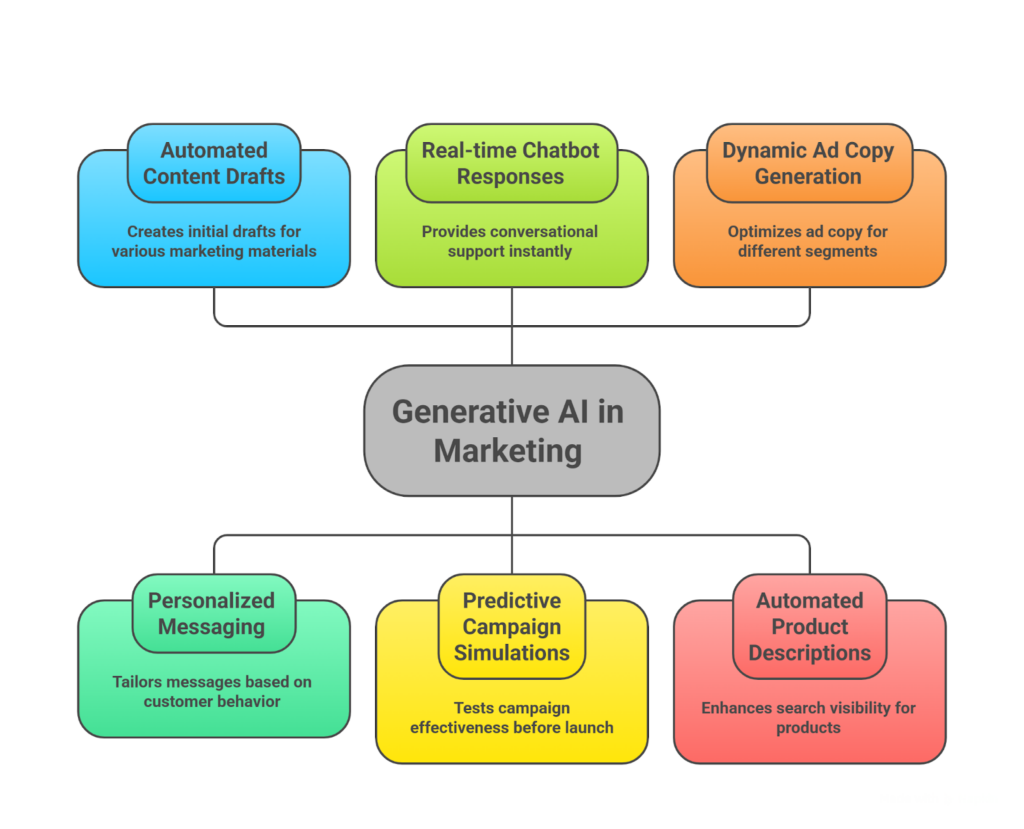
Some of the most impactful use cases include:
- Automated content drafts for blogs, emails, and landing pages
- Personalized messaging tailored to behavioral data
- Real-time chatbot responses that feel conversational
- Predictive campaign simulations before launch
- Dynamic ad copy generation for different audience segments
- Automated product descriptions optimized for search visibility
These applications reduce friction in execution while improving relevance. Marketing becomes less about pushing messages and more about creating responsive experiences.
AI in Advertising Optimization
Advertising is one of the fastest areas of adoption. Generative AI analyzes performance data continuously and adjusts creative elements in real time. Headlines, visuals, and targeting strategies can evolve without waiting for manual review cycles.
Teams that operate in environments similar to a Paid Ads Agency use these capabilities to manage large campaign portfolios efficiently. Instead of static A/B testing, AI enables continuous optimization. Campaigns behave like living systems that adapt to audience response.
This leads to stronger performance and more efficient budget allocation.
Benefits of Generative AI for Marketers
The advantages of generative AI extend beyond convenience. It changes how marketers allocate time, energy, and resources.
One major benefit is efficiency. Repetitive production tasks shrink dramatically, allowing teams to focus on strategy and creative direction. Faster execution also means brands can react quickly to market shifts and emerging trends.
Another benefit is consistency. AI tools can learn brand voice and style, helping maintain unified messaging across platforms. This consistency strengthens brand identity and improves audience trust.
Generative AI also enhances personalization at scale. Customers respond to communication that reflects their interests and needs. AI-driven customization allows marketers to deliver tailored experiences without manual segmentation.
Finally, predictive insights provide a strategic advantage. By analyzing large datasets, AI uncovers opportunities and risks that might otherwise go unnoticed. This leads to smarter decisions and measurable performance improvements.
Ethical Considerations and Responsible Use
With greater capability comes greater responsibility. Generative AI raises important ethical questions about privacy, transparency, and authenticity. Customers want personalized experiences, but they also expect their data to be handled responsibly.
Marketers must ensure AI-generated content remains accurate and respectful. Clear governance policies and human oversight are essential. AI should assist decisions, not replace accountability.
Transparency builds trust. When customers understand how their data is used and see consistent ethical behavior, they are more willing to engage. Responsible implementation is not just a compliance issue. It is a long-term brand strategy.
Skills Marketers Will Need in an AI-Driven Future
The rise of generative AI is changing the marketing skillset. Creativity remains essential, but technical literacy is becoming equally important. Marketers need to understand how to guide AI systems, interpret outputs, and refine results.
Human Creativity Still Leads
AI accelerates execution, but humans define direction. Emotional intelligence, storytelling, and strategic thinking cannot be automated. The most successful marketers will be those who combine creative insight with data fluency.
Future teams will blend creative professionals with analytical thinkers who understand AI workflows. This hybrid approach allows organizations to move quickly without losing authenticity.
The Future of Marketing with Generative AI
Generative AI is moving toward full ecosystem integration. Marketing platforms will increasingly connect content creation, analytics, personalization, and advertising into unified systems. Campaigns will adapt continuously based on real-time feedback.
Customer journeys will feel less like linear funnels and more like responsive experiences. Messaging will adjust based on behavior, context, and intent. Instead of reacting to customers, brands will anticipate needs.
This shift represents a deeper transformation than previous digital trends. It is not just about new tools. It is about redefining how marketing operates at its core.
Conclusion
Generative AI is reshaping marketing from the inside out. It accelerates creativity, enhances personalization, improves decision-making, and transforms advertising. At the same time, it challenges marketers to think carefully about ethics and responsibility.
The future belongs to teams that combine human insight with machine intelligence. Generative AI does not replace marketers. It expands what they can achieve. As the technology matures, marketing will become more adaptive, more relevant, and more deeply connected to customer needs.
At its heart, marketing has always been about relationships. Generative AI simply gives us more powerful tools to build them.